


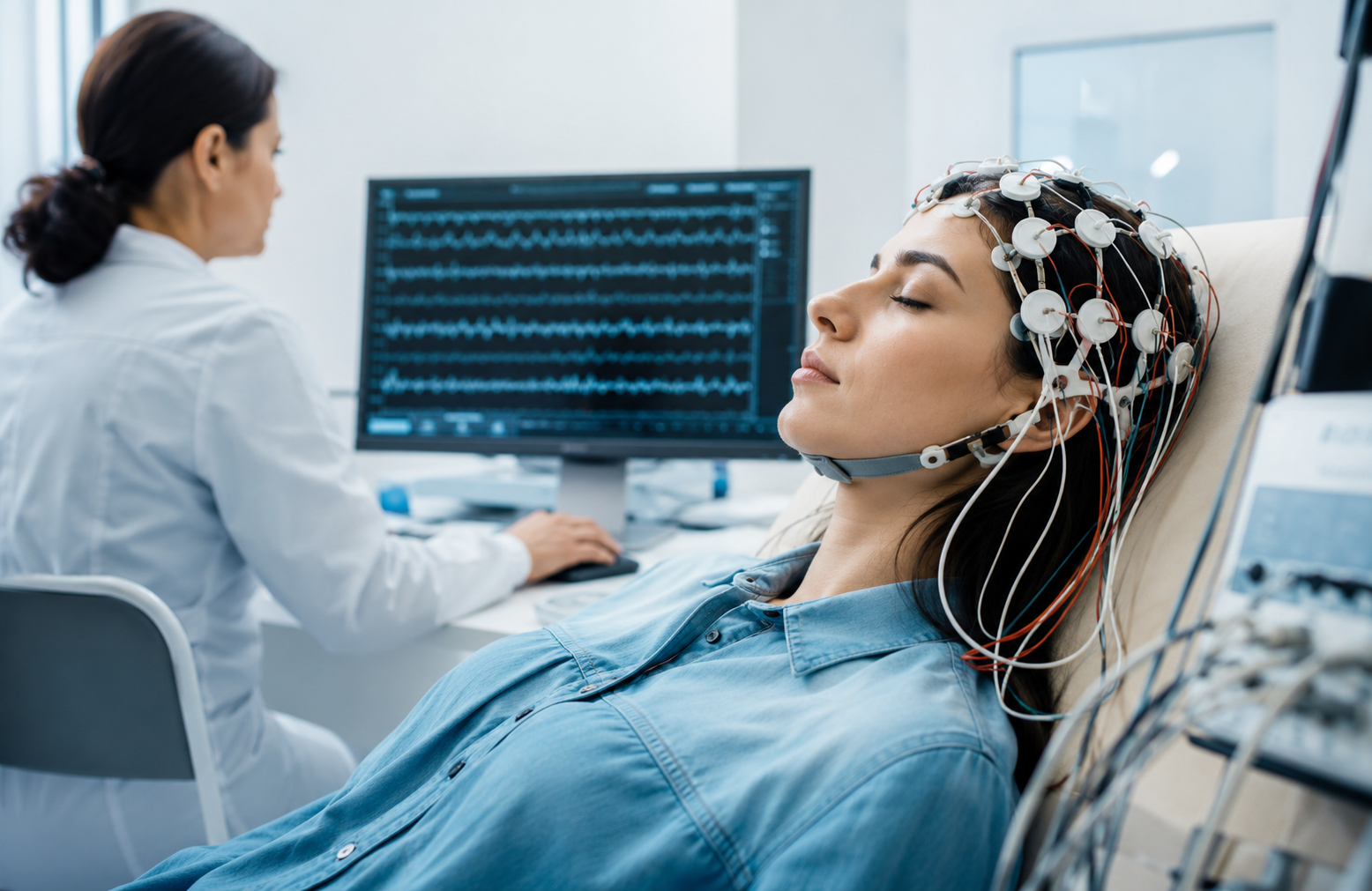
People experiencing seizures or suffering from epilepsy often need to consult doctors frequently due to their respective conditions. That one test that most healthcare providers recommend for these conditions is an electroencephalogram (EEG). It helps them diagnose other additional reasons behind a person’s confusion, fainting, changes in behavior, or memory loss.
Many people fear EEG tests because it involves the use of several needles and electric shocks. However, in reality, it is a normal test where a technician sticks small metal discs on the patient’s scalp and records their brain's activity.
In this guide, let’s clear up what an EEG test actually is and what happens during and after the procedure.
What is an EEG Test?
The human body depends on the nerves present in your brain to pass signals and carry out our day-to-day activities. In short, it never really switches off because its cells send tiny electrical signals throughout the day.
An EEG test takes a closer look at the brain's activity and records it in the form of waves for doctors to read them and see how the brain is working.
Most doctors order an EEG test for many reasons. Seizures are one of the most common reasons. Some doctors may also order this test if they want to diagnose frequent fainting, trouble sleeping, memory problems, or the aftermath of a head injury. Reading the brain waves helps them spot problems that a regular exam can miss.
So, Does an EEG Test Hurt?
No, an EEG test is completely safe and painless. It uses electrodes which are small metal discs that can record your brain’s activity.
Some people get worried about the cool, sticky gel or paste used to keep the electrodes in place, but it does not cause any pain. The biggest inconvenience is mostly washing the glue out of the hair after the test. Many people also feel sitting for long hours during the procedure is quite challenging.
What Actually Happens During the EEG Test
Medical tests and procedures can feel less stressful when you know what to expect. Here’s what actually happens during an EEG test.
A routine EEG usually goes like this:
● A person sits in a comfy chair or lies on a bed.
● They measure the head and mark the spot for placing the electrodes.
● Around twenty small discs are stuck to the scalp with paste.
● Wires from the discs plug into a machine that records the waves.
● The person is expected to stay still and relax so the test records the right readings.
An EEG test normally takes about 20 to 60 minutes. The technician can ask you to do certain tasks throughout the test, like breathing heavily or very fast for a couple of minutes, or watching lights flash for about a minute or more.
Breathing fast, which is known as hyperventilation, can trigger the nerves and bring out unusual brain waves that may not be visible normally. The flashing light test records how the brain responds to blinking light and is also called a photic stimulation.
Both can make a person feel a little dizzy or lightheaded for a moment, but the feeling fades away quickly. A technician monitors you throughout the test and stops it if they find something odd.
They ask you to carry out these tasks to have a holistic look at your brain functions. This helps them get better results.
How to Get Ready for an EEG
Preparing before the actual test can ease out some of the anxiety and help the test run smoothly. Some things to remember before the test include:
● Wash your hair the night before and skip oils, gels, and sprays.
● Eat as usual, since an empty stomach can change the results.
● Ask the doctor about your daily medicines, as they too can alter the results.
● For a sleep-deprived test, follow the sleep limit the clinic gives.
A neurologist in Mumbai or any other brain doctor near you will share exact instructions before the EEG test.
It's important to follow the steps before the visit, as the instructions will depend on the reason why the test is conducted. So follow them through and remember to get proper sleep and arrive relaxed.
What Happens After the Test
Once the EEG test ends, the technician will peel off the electrodes and wipe away most of the glue. You might feel some of it in your hair, but that’s quite normal.
After the test, the person can go back to normal activities without worrying about resting or any side effects. A person can eat, drive, and head back to work unless the doctor says otherwise.
A specially trained doctor then studies the brain waves and writes a report. Results often take a few days to a couple of weeks to reach the doctor who ordered the test. A doctor specialising in brain and nerve care in Mumbai can explain what the waves mean and whether any next step needs to be taken. Reading an EEG test result requires a professional, so waiting for that expert review is very normal.
How Much Does an EEG Cost?
EEG test prices aren't the same everywhere. The cost depends on the city, the type of hospital, and the kind of EEG ordered. A short routine test usually costs less than a long video EEG that records for hours or overnight.
If someone has health insurance, it may cover part of the bill when a doctor orders the test for a medical reason. Before you start with the test, ask the clinic for a clear estimate to avoid any surprises later.
When to Talk to a Doctor
If signs like repeated fainting, blackouts, or seizures are becoming an everyday thing, it is worth going through a proper check. An EEG test is one safe, painless procedure a doctor can use to find the root cause of your problems.
General information like this is no substitute for real medical advice, so anyone with worrying signs should be examined in person. Understanding that the test is simple and pain-free can make that first step feel far less scary.





Leave a Comment